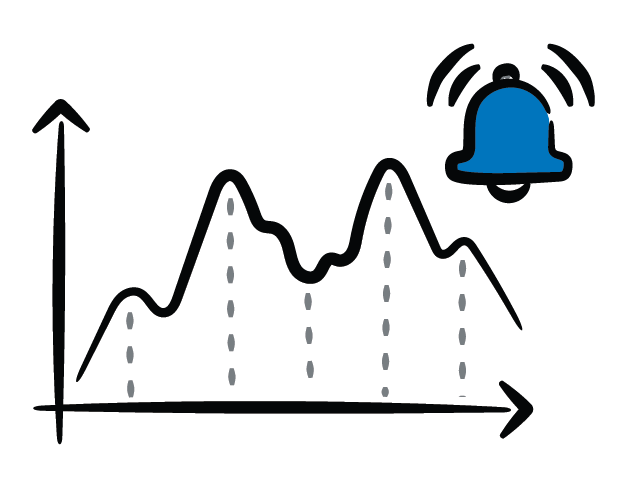
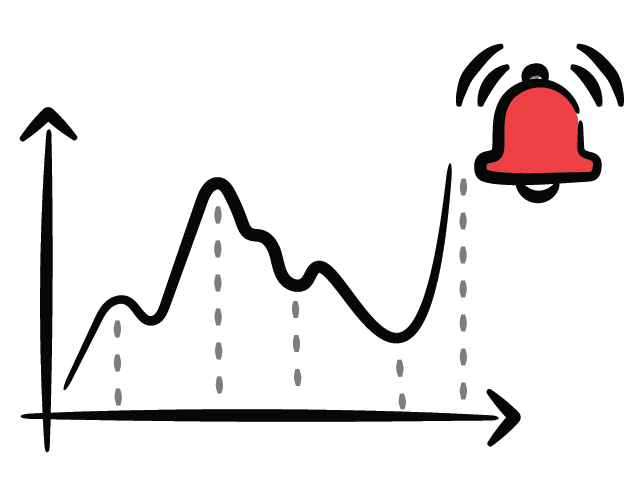
But what happens if there is a power failure, your fridge heats up, stock is damaged, and then power returns and your fridge cools down again? If you were to then look at the temperature you would only see that your fridge is cold. For a restaurant they now run the risk of serving potentially hazardous food to customers. For pharmacies and GPs, their vaccines may be compromised.
Alarms are designed to
notify you of what is currently a problem
AND
remind you of what may have been a problem
An alarm record is created when a problem starts to occur.
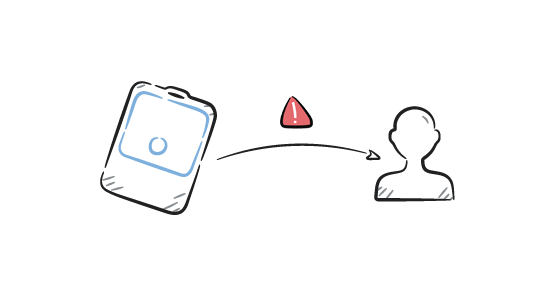
We will then start to notify people that there is a problem. We can do this with emails and phone notifications.
If repeat notifications are enabled (and they are by default), we will then continue to send notifications.
Depending upon how it is configured, the reminders won’t stop until:
– one user acknowledges that there is a problem (they literally press the “Acknowledge alarm” button. By default, the phone notifications are designed to disturb you so that you know there is a problem. Once one person has been disturbed and acknowledges that there is a problem we don’t need to disturb other people.
– the problem is fixed. An offline alarm, for example, occurs when we haven’t heard from a logger or gateway in a while. Once it is back online there is no need to disturb users because all is working.
– the problem is acknowledged OR fixed.
– the problem is acknowledged AND fixed. Our temperature related email notifications are typically set this way. It ensures you are reminded until the problem is fixed, but if it automatically fixes itself overnight, we still want you to acknowledge that there was a problem.

There are two parts to answering this question. The first is “what am I meant to do in Clever Logger?” and “how do I fix the problem?”
The following articles will answer each of these questions.
This includes information on how to view them, acknowledge them and close them.
Including high and low temperature alarms, offline alarms and low battery alarms.
Including how to add notification groups, change settings, and
Including how to add and remove users, and change their level of access.
The National Association of Testing Authorities (NATA) is the recognised national accreditation authority for analytical laboratories and testing service providers in Australia. It is an independent, not-for-profit organisation that provides independent assurance of technical competence.
NATA accredits organisations to perform testing and inspection activities for their products and services. This gives consumers the assurance they need to make safe, healthy and reliable choices .
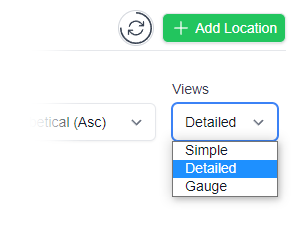
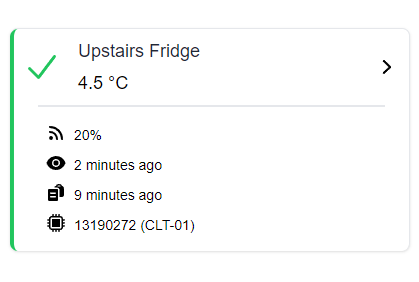
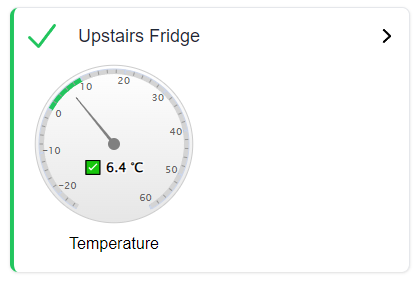
In the top right corner of the Location page, you will find the View chooser.
There are three options: Simple, Detailed and Gauge.
| QUICK SPECS | |
|---|---|
| Model | CLD-01 |
| Type | Temperature only with Dual Sensors |
| Temperature Range | Internal sensor: -23°C to +60°C External sensor: -40°C to +80°C |
| Humidity Range | N/A |
| Battery Type | CR2450 |
| Battery Life | Replace every 12 months |
| Accuracy |
Internal Sensor: ±0.3℃ (0℃ to +60℃) ±0.3℃ to ±0.7℃ (other temperatures) External Probe: ±0.5℃ (-20℃ to +40℃) ±1℃ (other temperatures) |
| Offline Memory | approx 24 days logging at 5 minute intervals |
| QUICK SPECS | |
|---|---|
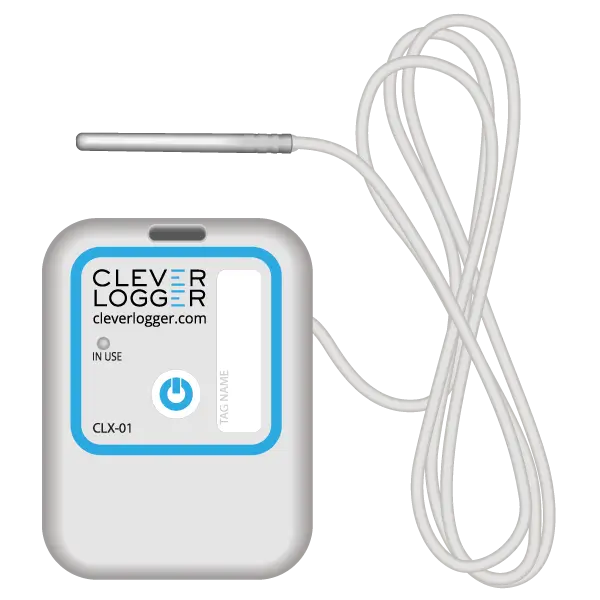
| Model | CLX-01 |
| Type | Temperature only with Probe |
| Temperature Range | -40°C to 60°C Can operate up to 80°C for short periods |
| Humidity Range | N/A |
| Battery Type | CR2450 |
| Battery Life | Replace every 12 months |
| Accuracy | ±0.5℃ (-20℃ to +40℃) ±1℃ (other temperatures) |
| Offline Memory | approx 24 days logging at 5 minute intervals |
To prove it, we’ll send you a Starter Kit to try out for a whole month.
Set it up, have a play, explore the features – obligation free.
If you love it, just let us know.
If not, just send it back.