

For any business dealing with critical temperature data – from the big pharmacy chains to the local medical clinics – the core challenge isn’t just about meeting compliance requirements; it’s all about trust. The integrity of your cold chain is fundamental to patient safety, and any failure can instantly compromise your brand’s reputation.
So, how exactly does digital data logging – like the kind Clever Logger provides – integrate into your quality assurance and act as a powerful layer of brand protection?
The short answer is: Logging converts the risky, manual compliance process into an irrefutable, always-on digital history.
The most important question here is, “How do I prove that we followed every single step correctly when an auditor or an internal investigation needs evidence?”
Why automated logging is your best defence:
A quality digital logger doesn’t just measure temperature – it’s a communications system that manages risk for you.
What a robust system delivers to support QA:
Implementing logging isn’t just a technology replacement; it allows administrators to streamline workflows and focus on higher-value tasks.
How you can leverage the data to strengthen procedures:
The true value of a digital logger becomes crystal clear when a temperature excursion occurs and the product integrity is in doubt.
What if the power goes out?
Data logging is about removing the guess work. It gives every person on your team, from the floor staff to the CEO, confidence that the cold chain is managed reliably and compliantly.
To ensure your QA process is fully backed by irrefutable data, the best next step is to assess the current state of your historical records. If pulling a comprehensive temperature report for an incident three months ago takes more than a minute, it’s a clear sign that you need to discuss modern, cloud-based data logging solutions to protect your brand.

The National Association of Testing Authorities (NATA) is the recognised national accreditation authority for analytical laboratories and testing service providers in Australia. It is an independent, not-for-profit organisation that provides independent assurance of technical competence.
NATA accredits organisations to perform testing and inspection activities for their products and services. This gives consumers the assurance they need to make safe, healthy and reliable choices .
| QUICK SPECS | |
|---|---|
| Model | CLD-01 |
| Type | Temperature only with Dual Sensors |
| Temperature Range | Internal sensor: -23°C to +60°C External sensor: -40°C to +80°C |
| Humidity Range | N/A |
| Battery Type | CR2450 |
| Battery Life | Replace every 12 months |
| Accuracy |
Internal Sensor: ±0.3℃ (0℃ to +60℃) ±0.3℃ to ±0.7℃ (other temperatures) External Probe: ±0.5℃ (-20℃ to +40℃) ±1℃ (other temperatures) |
| Offline Memory | approx 24 days logging at 5 minute intervals |
| QUICK SPECS | |
|---|---|
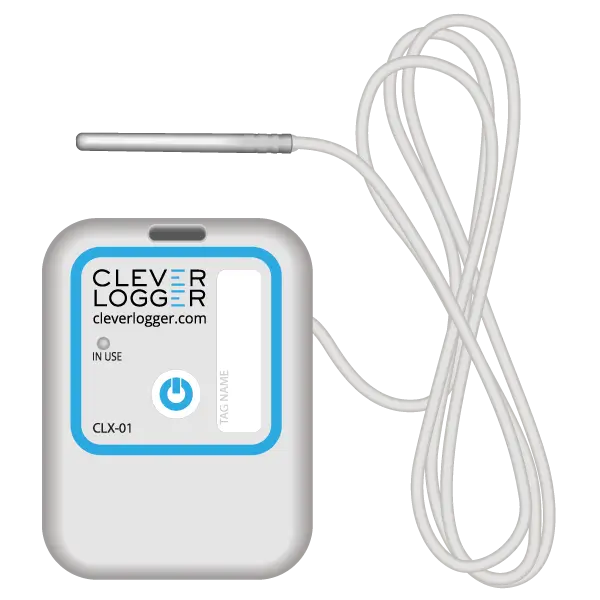
| Model | CLX-01 |
| Type | Temperature only with Probe |
| Temperature Range | -40°C to 60°C Can operate up to 80°C for short periods |
| Humidity Range | N/A |
| Battery Type | CR2450 |
| Battery Life | Replace every 12 months |
| Accuracy | ±0.5℃ (-20℃ to +40℃) ±1℃ (other temperatures) |
| Offline Memory | approx 24 days logging at 5 minute intervals |
To prove it, we’ll send you a Starter Kit to try out for a whole month.
Set it up, have a play, explore the features – obligation free.
If you love it, just let us know.
If not, just send it back.