
While not specifically mandating it, the Strive for 5 guidelines make several references to having multiple loggers in the same fridge. And it actually makes a lot of sense.
$615.45
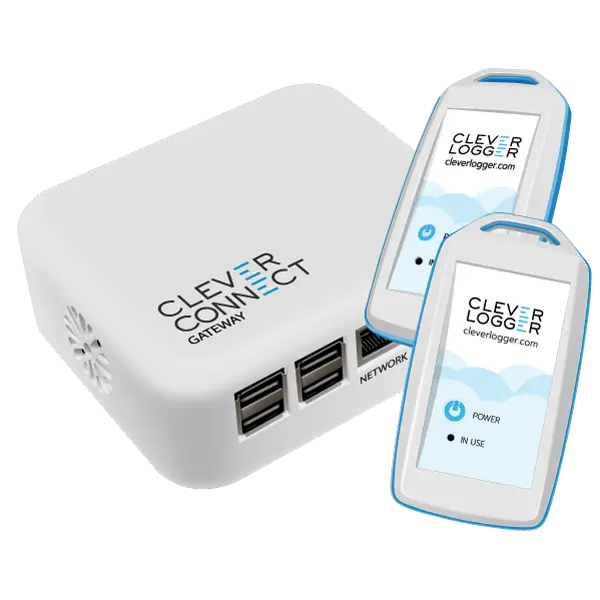
We can send your loggers off for special testing in a lab. The lab will give you a certificate of accuracy.
But do you need it?
It’s a fact that the temperature in different parts of a fridge can vary by a few degrees. Modern fan-forced vaccine fridges generally do a good job of evening out the temperature, but there will still be variations between top and bottom, front and back, especially if the fridge is reasonably full.
The National Vaccine Storage Guidelines (Strive for 5) is the bible for vaccine storage management for Australian immunisation service providers.
On page 36 and 37, there’s a whole section on learning about the hot and cold spots in the fridge.
The relevant sections are highlighted…
Staff should familiarise themselves with the vaccine refrigerator by recording temperatures in various sections of the refrigerator. The key areas to monitor are on each shelf from top to bottom, front to back and side to side. Leave the data logger in each position for a minimum of 24 hours.
[…]
It is important that the cold spots in the refrigerator are identified by detailed monitoring. This can be done by placing data loggers (see Section 4.2) or thermometers in all areas of the refrigerator and noting the different temperatures before using the refrigerator for vaccine storage. More than one data logger or thermometer will be required. Monitoring each area for at least 24 hours will capture all of the fluctuations that occur.

On page 25 of Strive for 5, there is a checklist for data loggers. One of the points on the checklist talks about checking the accuracy of the loggers.
It says …
Regularly check and record the accuracy of the data logger. Record the date the accuracy check is done. To check the accuracy, place a second data logger in the refrigerator next to the existing data logger to obtain comparison temperature readings.
Having that extra accuracy check is great for your peace of mind.
Clever Loggers are very reliable, but anything can fail, so having a second logger means that you will always have a log of your temperature data.
If you need to transport some of your vaccines, your second logger can travel with them to maintain the cold chain.
Probably not.
It’s certainly not a requirement for storing vaccines.
In general, the only people who request additional accuracy certification are people running clinical scientific trials.
The certificates start from $121 per logger and add 7-10 business days to the delivery time.
| QUICK SPECS | |
|---|---|
| Model | CLD-01 |
| Type | Temperature only with Dual Sensors |
| Temperature Range | Internal sensor: -23°C to +60°C External sensor: -40°C to +80°C |
| Humidity Range | N/A |
| Battery Type | CR2450 |
| Battery Life | Replace every 12 months |
| Accuracy |
Internal Sensor: ±0.3℃ (0℃ to +60℃) ±0.3℃ to ±0.7℃ (other temperatures) External Probe: ±0.5℃ (-20℃ to +40℃) ±1℃ (other temperatures) |
| Offline Memory | approx 24 days logging at 5 minute intervals |
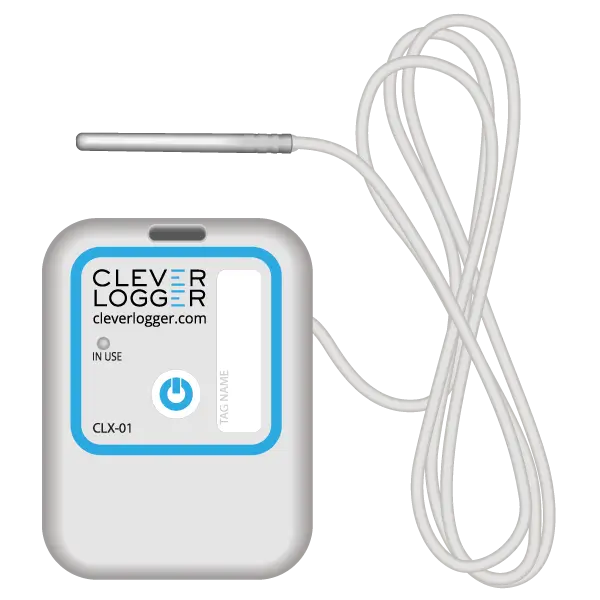
| QUICK SPECS | |
|---|---|
| Model | CLX-01 |
| Type | Temperature only with Probe |
| Temperature Range | -40°C to 60°C Can operate up to 80°C for short periods |
| Humidity Range | N/A |
| Battery Type | CR2450 |
| Battery Life | Replace every 12 months |
| Accuracy | ±0.5℃ (-20℃ to +40℃) ±1℃ (other temperatures) |
| Offline Memory | approx 24 days logging at 5 minute intervals |

The National Association of Testing Authorities (NATA) is the recognised national accreditation authority for analytical laboratories and testing service providers in Australia. It is an independent, not-for-profit organisation that provides independent assurance of technical competence.
NATA accredits organisations to perform testing and inspection activities for their products and services. This gives consumers the assurance they need to make safe, healthy and reliable choices .
To prove it, we’ll send you a Starter Kit to try out for a whole month.
Set it up, have a play, explore the features – obligation free.
If you love it, just let us know.
If not, just send it back.