
Even when the rules haven’t changed dramatically, the expectation of evidence usually does.
ACECQA’s Quality Improvement Plan (QIP) template was updated in January 2026, and it reinforces that services must have a QIP (Regulation 55), review it at least annually (Regulation 56), and be ready to provide it to the regulatory authority on request.
In plain English: it’s not enough to say “we do food safety well” – you need to show how you do it, how often, and what you do when something goes wrong.
Kitchen processes commonly fall under Quality Area 2: Children’s health and safety (QA2). QA2 is about safeguarding children’s health and safety and minimising risk.
Two very relevant requirements are:
This is directly linked to Element 2.1.2 (Health practices and procedures).
For kitchens, “safe food practices” includes things like:
This is linked to Element 2.2.1 (Supervision / protection from harm and hazard).
If you take food on excursions (or even do regular outings), you’re expected to complete risk assessments, and keep them current.
Paper temperature sheets fail for three common reasons:
When scrutiny increases, the gap between “we check temps” and “we can prove safe storage over time” gets very obvious.
For early learning centre kitchens, the goal isn’t “more data”. It’s better evidence with less effort.
A good system should give you:
For day care kitchens, many fridges are basically domestic fridges – they fluctuate more than purpose-built medical fridges.
That’s why the best setup is:
This reduces false alarms and gives a more meaningful picture of food safety conditions – especially during busy periods.
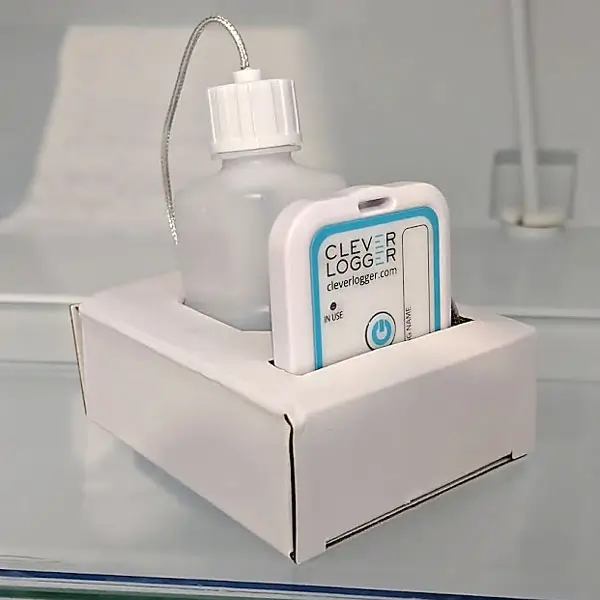
This kit contains everything you need to monitor a single day care centre fridge or cool room, including a vial of glycol to buffer recordings against frequent temperature changes.
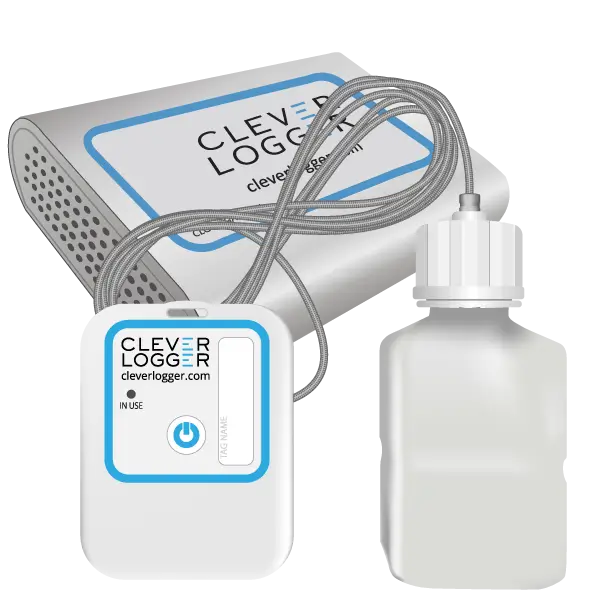
If you want something you can confidently point to in an assessment visit, aim for this:
That combination supports Regulation 77 expectations around safe food practices and strengthens your QA2 evidence base.
Below is wording that fits the QIP “improvement plan” style and maps to QA2.
Issue identified: Manual temperature recording does not capture short temperature excursions; inconsistent evidence for safe food storage.
Goal: Maintain safe storage temperatures in kitchen refrigeration and improve evidence for safe food practices under Regulation 77.
How we’ll get there (steps):
Success measure: 100% of required units have continuous logs; all out-of-range events have documented corrective action within the same day.
By when: (Insert date – e.g. within 4 weeks)
Issue identified: Excursion food safety risks need clearer, consistent documentation.
Goal: Ensure excursion-related food storage risks are assessed and documented in line with Regulation 100.
How we’ll get there (steps):
Update excursion risk assessment template to include cold food transport controls (coolers, ice bricks, time limits).
Keep risk assessments current (review when circumstances change and at least annually for regular outings).
Success measure: 100% of excursions have a completed risk assessment and documented controls.
By when: (Insert date)
Do early learning centres have to record fridge temperatures?
Services are expected to ensure safe food practices (Regulation 77) and be able to demonstrate how they manage risk under QA2. Temperature records are one of the simplest ways to show this.
Is a once-a-day check enough?
Once-a-day checks can miss short spikes. Continuous logging gives stronger evidence and earlier warnings.
Why use glycol instead of measuring air temperature?
Air temperature jumps every time the door opens. Glycol smooths those spikes so you’re tracking something closer to “food temperature”, which is what matters for safety decisions.
What do we show an auditor?
Your exported reports (trend + events), your written procedure, and a record of what you did when temperatures went out of range.
To prove it, we’ll send you a Starter Kit to try out for a whole month.
Set it up, have a play, explore the features – obligation free.
If you love it, just let us know.
If not, just send it back.
| QUICK SPECS | |
|---|---|
| Model | CLD-01 |
| Type | Temperature only with Dual Sensors |
| Temperature Range | Internal sensor: -23°C to +60°C External sensor: -40°C to +80°C |
| Humidity Range | N/A |
| Battery Type | CR2450 |
| Battery Life | Replace every 12 months |
| Accuracy |
Internal Sensor: ±0.3℃ (0℃ to +60℃) ±0.3℃ to ±0.7℃ (other temperatures) External Probe: ±0.5℃ (-20℃ to +40℃) ±1℃ (other temperatures) |
| Offline Memory | approx 24 days logging at 5 minute intervals |
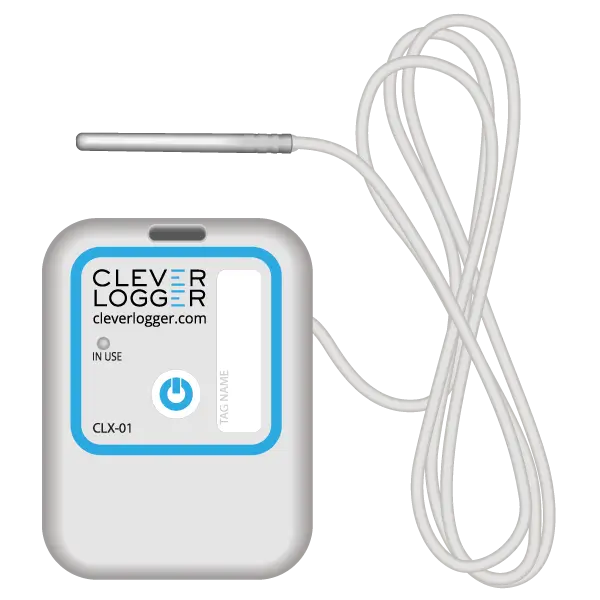
| QUICK SPECS | |
|---|---|
| Model | CLX-01 |
| Type | Temperature only with Probe |
| Temperature Range | -40°C to 60°C Can operate up to 80°C for short periods |
| Humidity Range | N/A |
| Battery Type | CR2450 |
| Battery Life | Replace every 12 months |
| Accuracy | ±0.5℃ (-20℃ to +40℃) ±1℃ (other temperatures) |
| Offline Memory | approx 24 days logging at 5 minute intervals |